Kitchen Gardening
Kitchen Garden: How to Plan, Plant, and Grow Fresh Food at Home

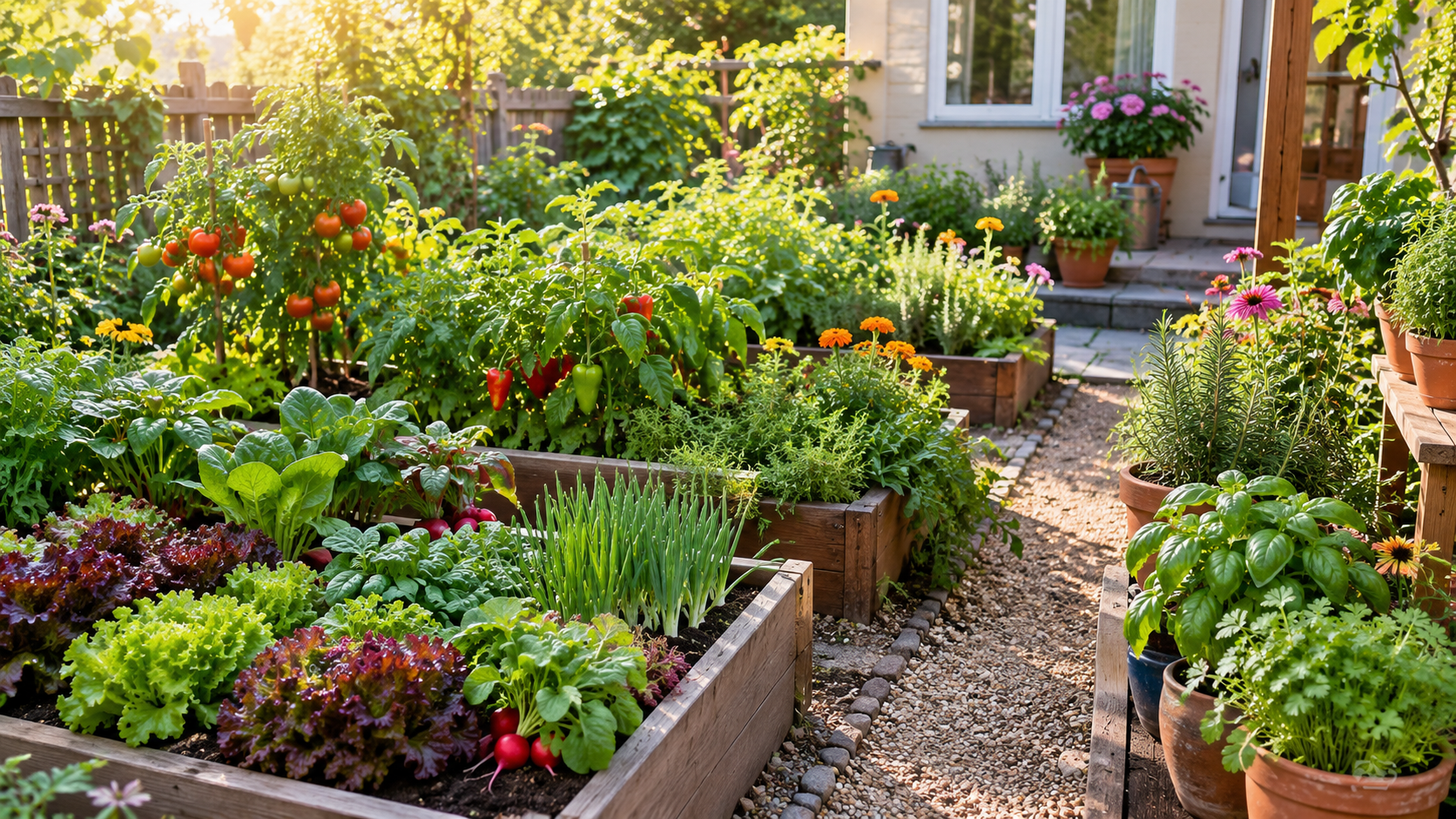
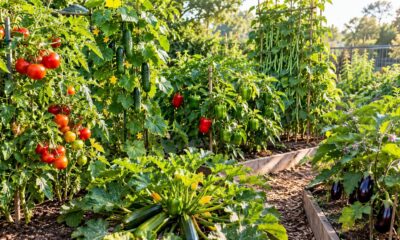
A Kitchen Garden brings fresh vegetables, herbs, and sometimes fruit within easy reach of your everyday meals. It can be a few containers on a balcony, a raised bed beside the house, or a larger backyard plot. You do not need a huge Vegetable Garden or years of experience to begin.
The key is to match your garden to your space, climate, sunlight, soil, and the foods you actually enjoy eating. A well-planned Kitchen Garden is not simply a collection of plants. It is a practical growing space designed around regular harvesting.
This guide explains how to choose a site, prepare soil, select crops, plant and water correctly, manage pests, and keep harvests coming through the season.
What Is a Kitchen Garden?
A Kitchen Garden is a home food-growing space designed to provide convenient access to vegetables, herbs, and other edible plants. Unlike a large production-oriented Vegetable Garden, it can be relatively small and focused on crops you use regularly.
The most useful Kitchen Garden is one you can easily visit. Being close to the kitchen is convenient, but sunlight and drainage should come first. Most vegetables need at least six hours of direct sunlight, while many perform even better with more.
You can create a Kitchen Garden in:
- A backyard
- Raised beds
- Containers or ceramic planters with saucers
- Grow bags
- A balcony
- A rooftop
- A narrow garden border
- A dedicated kitchen herb garden
How to Choose a Kitchen Garden Location
Start by observing your space before buying seeds or building beds.
Look for Sunlight
Choose the sunniest practical location. Buildings, walls, fences, trees, and neighboring structures can create shadows that change throughout the day. Most vegetables need roughly 6–8 hours of direct sunlight, although individual crops differ.
If your space receives less light, do not automatically abandon the idea. Instead, choose crops that tolerate lower light better and reserve the brightest locations for sun-loving crops.
Check Drainage
Healthy roots need both moisture and oxygen. Avoid areas where water remains standing after rain because poorly drained soil can encourage root problems and disease.
A simple observation helps: after rainfall, notice whether water disappears reasonably quickly or sits around the future garden area.

How to Prepare a Kitchen Garden
You can plant directly in the ground or build a raised bed.
A raised bed kitchen garden is particularly useful when native soil drains poorly, is difficult to work, or you need greater control over the growing medium. Raised beds can also make small spaces easier to organize.
For an in-ground Kitchen Garden, improve poor soil with suitable organic matter rather than simply adding fertilizer. Organic matter can improve soil structure, moisture retention, drainage, and nutrient-holding capacity.
If you are growing in containers, use a quality container growing medium rather than filling pots with heavy garden soil. Containers need drainage holes because waterlogged roots have limited access to oxygen.
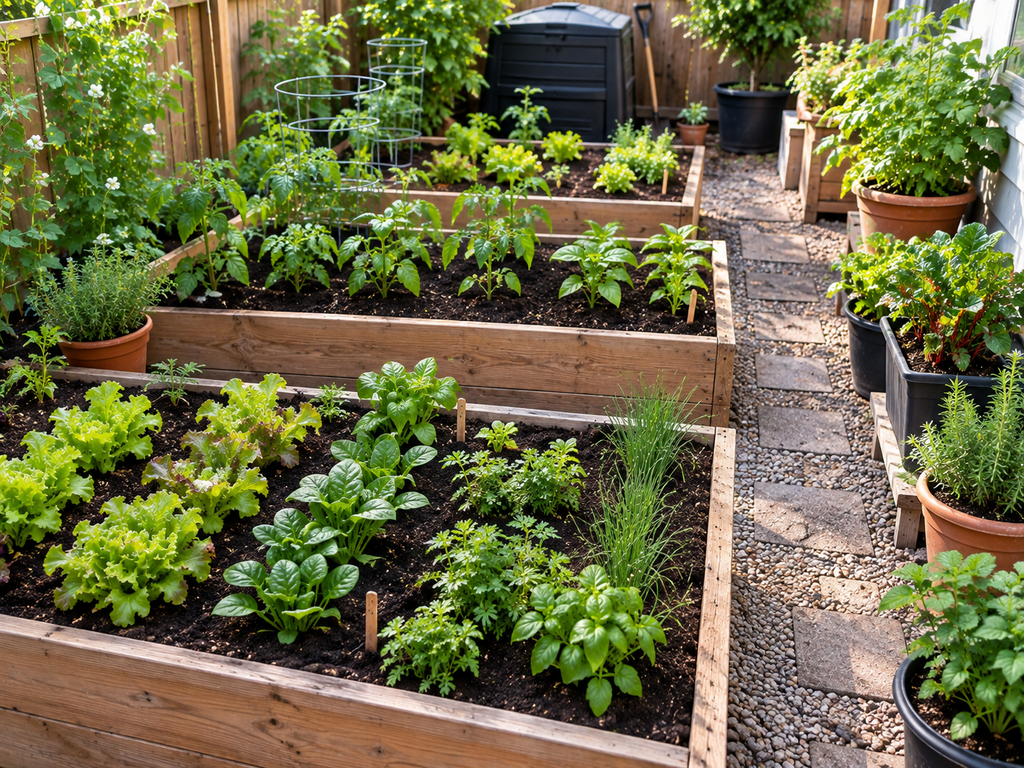
Choose Kitchen Garden Plants You Will Actually Eat
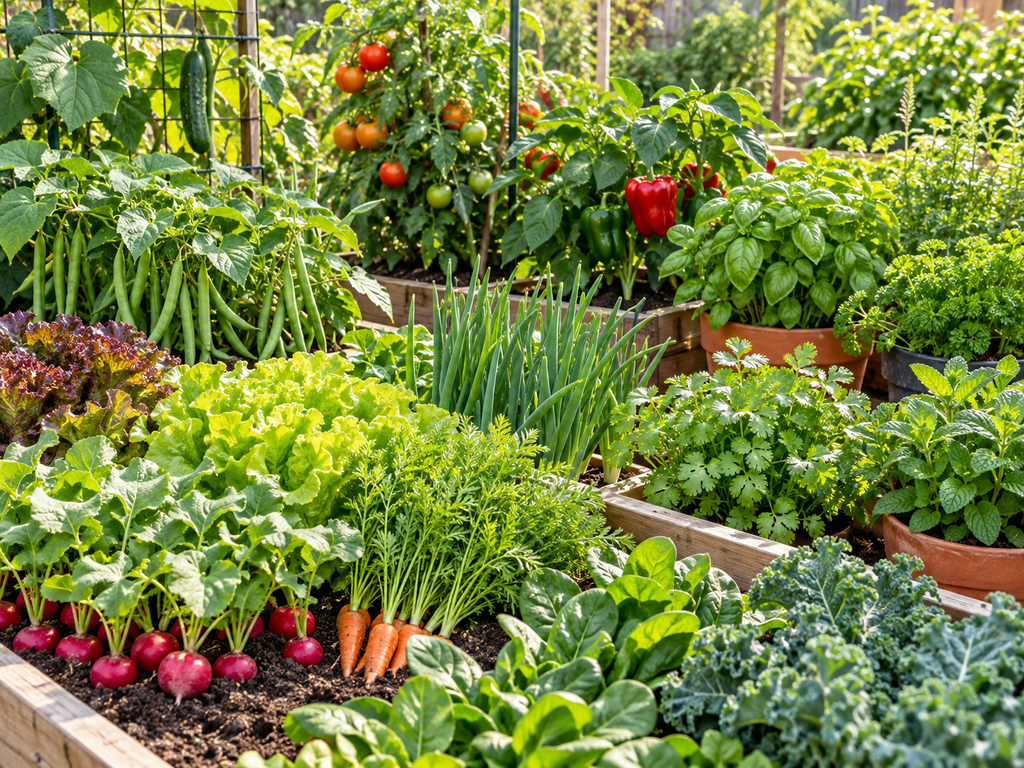
One of the simplest ways to make a Kitchen Garden successful is to start with foods your household already enjoys.
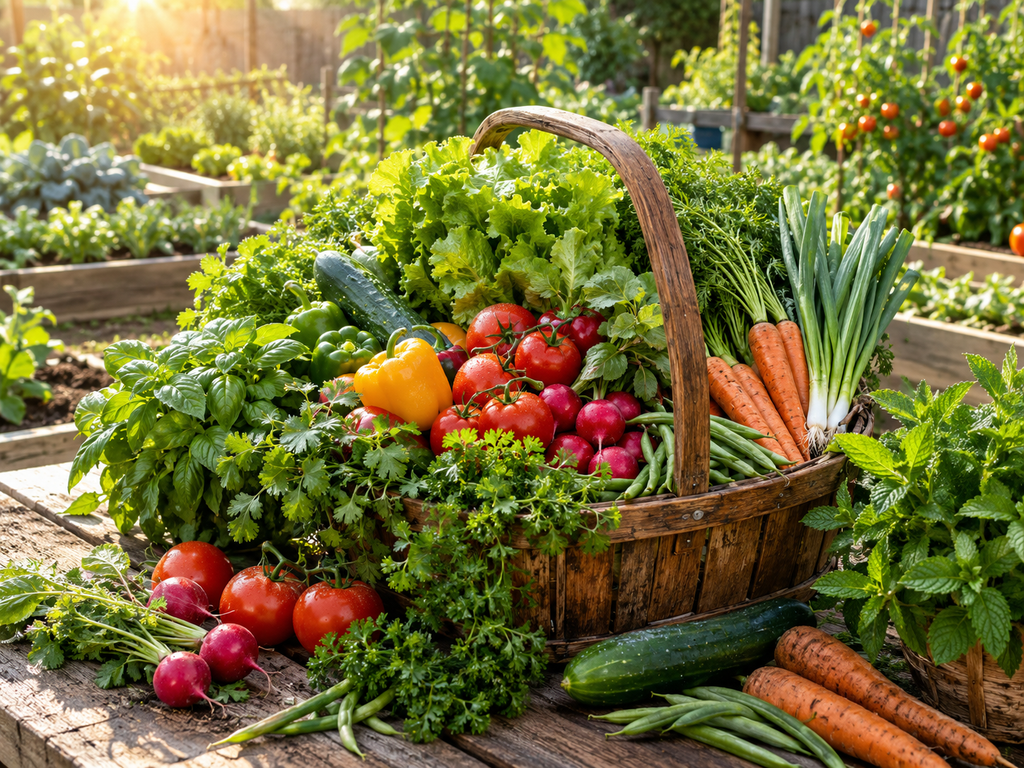
Think about your normal meals. If you frequently use coriander, mint, basil, green onions, lettuce, spinach, tomatoes, chilies, or radishes, give those crops priority.
A useful beginner combination might include:
- Leafy greens: lettuce, spinach, kale, Swiss chard
- Roots: radishes, carrots, beets
- Fruiting vegetables: tomatoes, peppers, cucumber, zucchini
- Legumes: bush beans and peas
- Herbs: basil, coriander, parsley, mint, rosemary, thyme
- Quick crops: radishes, salad greens, green onions
Do not feel obligated to grow every popular vegetable. A smaller garden filled with crops you regularly harvest is usually more useful than a larger garden full of plants you rarely eat.
Plan Your Kitchen Garden Before Planting
A simple sketch can prevent many problems.
Mark the position of beds, containers, pathways, trellises, and taller plants. Put taller crops where they are less likely to shade shorter ones. Leave enough room to reach the plants without stepping on the growing soil.
Think about succession planting too. Instead of sowing all your lettuce or radishes on the same day, make smaller plantings at intervals appropriate to your local season. When one planting is harvested, another can be approaching maturity.
This approach turns a Kitchen Garden into a steady source of fresh food rather than a single large harvest.
Seeds or Transplants: Which Should You Use?
Both methods have a place in a Kitchen Garden.
Seeds are economical and give you access to wide varieties. They are particularly useful for crops that dislike root disturbance or are simple to direct-sow.
Transplants give some long-season vegetables a useful head start. Healthy seedlings can be especially helpful when your growing season is limited.
When buying transplants, look for sturdy plants with healthy green foliage and no obvious signs of pests or disease. Choosing plants suited to your local conditions is important because plants placed in unsuitable environments tend to experience more stress.
Watering a Kitchen Garden Correctly
Water deeply enough to supply the root zone, but avoid keeping the soil permanently saturated.
Young seedlings need closer attention because their roots occupy a small volume of soil. Containers can also dry faster than garden beds, particularly during hot, windy weather.
Rather than following one watering schedule everywhere, check the actual soil and consider:
- Temperature
- Recent rainfall
- Container size
- Soil type
- Plant size
- Crop requirements
Consistent moisture is particularly important for vegetable crops during heat stress and other sensitive growth periods.
If possible, drip irrigation or careful watering at soil level can reduce wet foliage and help manage disease pressure.
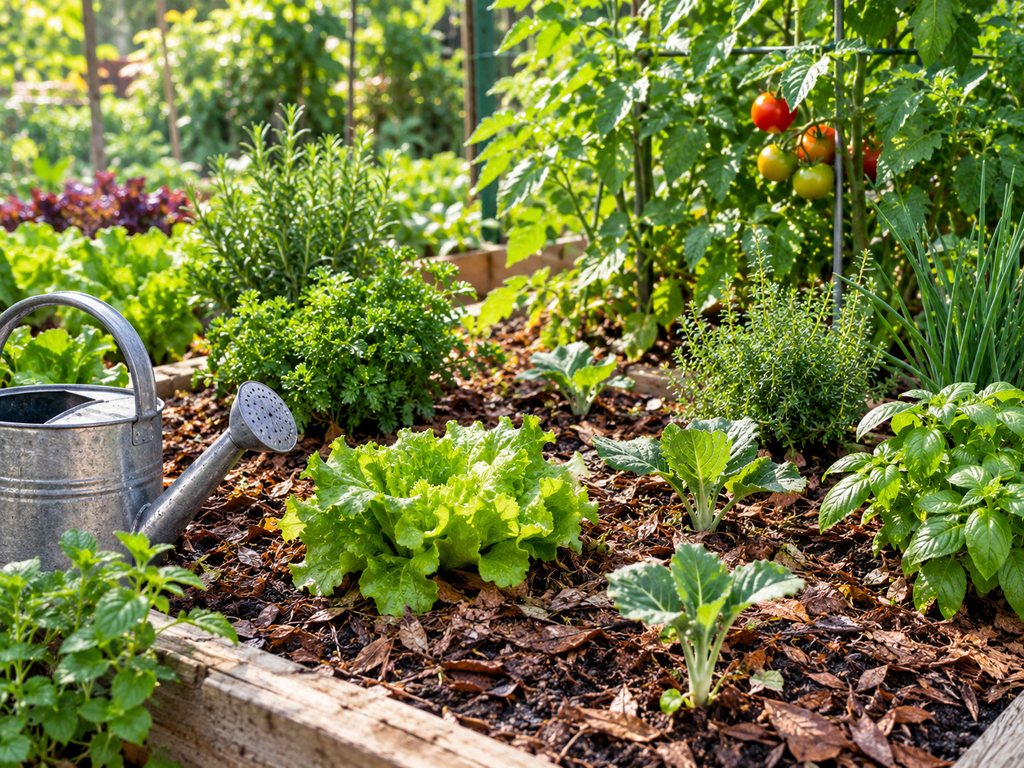
Use Mulch to Protect Your Kitchen Garden
Organic mulch can make everyday maintenance easier.
Suitable materials can include clean straw, shredded leaves, and appropriately used grass clippings. Mulch can reduce weed growth, conserve soil moisture, protect the soil surface, and contribute organic matter as it breaks down.
Keep the mulch from being piled directly against plant stems. The goal is to cover and protect the soil, not bury the plant.
Fertilizing and Feeding Your Plants
Good soil is the foundation of a productive Kitchen Garden, but plants still need access to nutrients.
Start with healthy soil and mature compost or other appropriate organic amendments. Do not assume that more fertilizer would make plants healthy on its own. Excess nutrients can create problems just as deficiencies can.
If plants show unusual yellowing, weak growth, poor flowering, or distorted leaves, first investigate watering, sunlight, root health, pests, and soil conditions before automatically adding fertilizer.
A soil test can provide useful information about pH and nutrient levels when soil fertility is uncertain.
Keep an Eye on Pests and Diseases
Walk through your Kitchen Garden regularly rather than waiting until a problem becomes severe.
Look underneath leaves for insects or eggs, inspect new growth for distortion, and check stems and fruit for unusual marks. You have more alternatives for handling an issue when it is discovered early. Good spacing, airflow, proper watering, weed control, and garden sanitation can reduce disease pressure. Watering near the soil rather than repeatedly wetting foliage can also help leaves dry faster.
Do not assume every damaged leaf means a disease. Identify the problem before treating it.
Seasonal Planning Makes a Kitchen Garden More Productive
There is not a single planting schedule that works for every kitchen garden. The right timing depends on climate, local temperatures, crop type, and variety.
Cool-season vegetables generally prefer cooler conditions, while warm-season crops need warmer soil and air temperatures. Local frost dates and seasonal weather patterns are therefore more useful than copying a calendar from another climate.
In hot climates, gardeners may need to protect tender crops from extreme heat, adjust watering, provide temporary shade, and choose heat-tolerant varieties. In colder regions, season extenders such as low tunnels or cold frames can extend the useful growing period.
Common Kitchen Garden Mistakes to Avoid
The biggest beginner problems are often simple:
- Starting with too much space — begin with a manageable area.
- Ignoring sunlight — vegetables cannot compensate for a seriously unsuitable location.
- Growing vegetables you do not eat — choose crops around your real meals.
- Overwatering — constantly wet soil can damage roots.
- Plants that are crowded may have more disease pressure due to inadequate airflow.
- Using the same planting date for everything — crops have different seasonal requirements.
- Waiting too long to harvest — frequent harvesting can keep some crops productive.
- Ignoring small problems — inspect plants regularly before pests or diseases spread.
A successful Kitchen Garden develops through observation. Pay attention to how quickly soil dries, how plants respond to heat, where shadows fall, and which crops your household actually uses.
Create a Kitchen Garden That Is Productive and Beautiful
A Kitchen Garden does not have to look like a miniature farm.
Consider combining vegetables with herbs and flowers. A potager garden can arrange edible plants in an attractive, organized design. Trellises can add height, while pathways make harvesting easier. Flowers can also provide visual interest and support beneficial insects.
Whether your garden is a single raised bed, a collection of containers, or a backyard Vegetable Garden, the best design is one that makes you want to visit it regularly.
3. Conclusion
A successful Kitchen Garden starts with the basics: enough sunlight, good drainage, healthy soil, suitable crops, consistent moisture, and regular observation. Growing useful food does not require a vast garden. Start with vegetables and herbs you already enjoy, learn how your particular space behaves, and expand as your confidence grows.
Growing more plants is not the only objective. It is to create a practical Kitchen Garden that fits your lifestyle and provides fresh food when you actually want to use it.
4. FAQs
What is a Kitchen Garden?
A Kitchen Garden is a home growing space designed primarily for producing vegetables, herbs, and sometimes fruit for regular household use. It can be cultivated on a balcony, raised bed, garden, or any other appropriate area.
How much sunlight does a Kitchen Garden need?
Most vegetables perform well with at least 6 hours of direct sunlight, while many benefit from 6–8 hours or more. Exact requirements vary by crop and climate.
What are the best plants for a Kitchen Garden?
Start with crops you regularly eat. Lettuce, spinach, radishes, green onions, herbs, tomatoes, peppers, cucumbers, beans, and carrots can all be useful choices, depending on your climate and available space.
Can I grow a Kitchen Garden in containers?
Yes. Containers work particularly well for herbs, leafy greens, and many compact vegetables. Instead of using just heavy garden soil, utilize containers with drainage holes and a suitable container growing material.
How often should I water a Kitchen Garden?
Not every garden can benefit from a certain routine. Check soil moisture and consider temperature, rainfall, soil type, container size, and the plant’s growth stage. The aim is consistent moisture without keeping roots waterlogged.


11 Summer Vegetables to Grow for a Productive Garden

How to Grow Vegetables Indoors

Easy Vegetables to Grow:10 Beginner-Friendly Vegetables

Home Vegetable Gardening: How to Grow Fresh Vegetables at Home

Organic Vegetables: Growing, Benefits, and Fresh Produce

Kitchen Garden: How to Plan, Plant, and Grow Fresh Food at Home

Winter Vegetables: A Beginner’s Guide to Growing, Caring for, and Harvesting Winter Crops
Home Vegetable Gardening: How to Grow Fresh Vegetables at Home
How to Grow Vegetables Indoors
Organic Vegetables: Growing, Benefits, and Fresh Produce
-
 Seasonal Vegetable Gardening6 days ago
Winter Vegetables: A Beginner’s Guide to Growing, Caring for, and Harvesting Winter Crops
-
 Growing Vegetables4 days ago
Home Vegetable Gardening: How to Grow Fresh Vegetables at Home
-
 Growing Vegetables5 days ago
Organic Vegetables: Growing, Benefits, and Fresh Produce
-
 Growing Vegetables3 days ago
Easy Vegetables to Grow:10 Beginner-Friendly Vegetables
-
 Growing Vegetables2 days ago
How to Grow Vegetables Indoors
-
 Seasonal Vegetable Gardening7 hours ago
11 Summer Vegetables to Grow for a Productive Garden